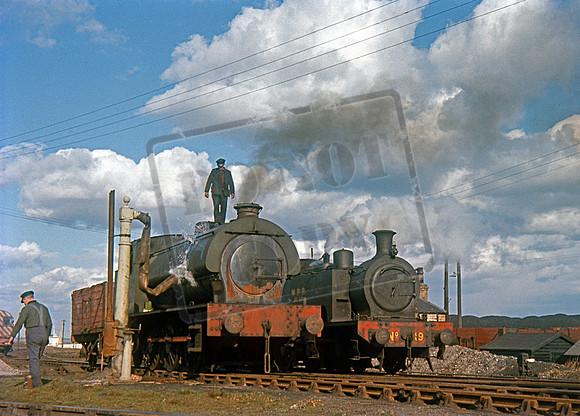
WPR 19 1969-04-16 Methil West
Double Headed Steam.
Double headed workings on the WPR were not unknown but their occurrence was unpredictable and rare. The WPR ‘main line’ with its fairly easy gradients probably never saw any double headed trains but the steep gradients existing elsewhere may have told a different story. Only on one occasion, in the many visits that I made to the railway did I see any double heading, and it proved to be a memorable event.
On the bright afternoon of 16th April 1969, a trip to Methil by the St Andrews University Railway Society found two Wemyss engines rather than the usual one, working the BR interchange yard. The first to show itself was the so-called No.13, a Hunslet type saddletank built at the Vulcan Foundry which was also the final engine purchased by the railway, shortly before the disaster at the Michael pit and which did not enter service until September 1967. Acquired by an organisation in steep decline, this saddletank had a short service on the WPR and was never to carry any formal WPR identity. The number 182 and dark olive green livery of its previous owner, the Army, accompanied it to the end, when scrapped in May 1970. Partnering the Vulcan that spring afternoon was one of the big Barclay sidetanks, No 19 of 1939 vintage which was also entering the last year of its existence.
The decision to double-head washer workings that day may have been the result of a backlog of coal stocks arriving at the yard brought in by British Railways. At this time the bulk of washer activity centred on coal being mined at Seafield and Frances, -pits not connected directly with the Wemyss Estate. The St. Andrews party observed the bustling activity in Methil yard that early afternoon, unaware of the excitement that was to unfold.
A lengthy train of coal in BR steel 16 ton wagons was sitting in the yard, destined for the washer. No 19 had already replenished its tanks and the crew were preparing the fire for the activity to come. Next, it was No 13’s turn to take refreshment from the water column close to Methil West signalbox. (Picture 1.)
Photo by and copyright of David P Williams